San Francisco to Napa Valley wine tours
A Napa day that starts in the city is a good day — as long as the travel is planned into it rather than bolted onto the end. Here is how the arithmetic actually works.
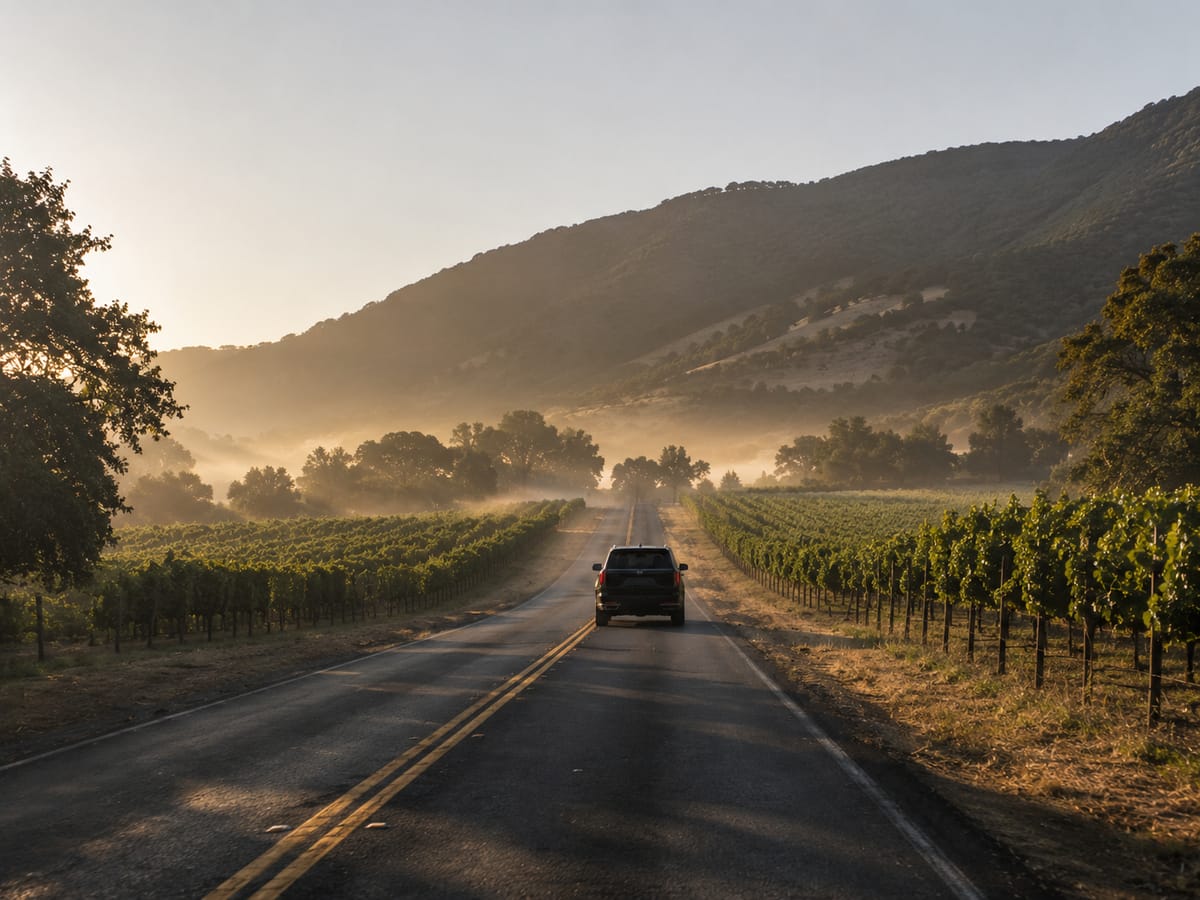
The travel comes off the top, not off the end
Napa Valley is not far from San Francisco. That is exactly why the day gets mis-planned: it looks close enough to treat as an afternoon, and it is not.
The honest way to think about it is that the round trip is a fixed cost paid before any wine is tasted. Whatever the drive takes northbound, you are also paying it southbound at the end of the day, when everyone is tired and the traffic is usually worse. Everything else — the appointments, lunch, the unhurried second glass — has to fit in what is left.
We will not put a fixed number of minutes on that drive, because there is not an honest one. It swings with the day of the week, the season, whether there is an event in the city, and how the bridges are behaving. A Tuesday in February and a Saturday in October are not the same journey.
What this means in practice: decide how much time you want in the valley first, then add the travel to it. Groups who book a total number of hours and hope the tastings fit inside are the ones who end up watching the clock through the last appointment.
Why the start time decides the whole day
- Leaving before the commute builds is worth more than any other decision. The same journey taken an hour later can cost a meaningful part of your tasting time, and you pay for it twice because it pushes everything back.
- Napa's first appointments are usually late morning. Arriving with a margin means you are settled and ready rather than walking in flustered; arriving with no margin means the first tasting starts badly.
- The return is the part people forget. Leaving the valley late in the afternoon puts you into southbound traffic. Groups who plan to be heading back before it peaks get home comfortably; groups who linger over a fourth tasting frequently do not.
- Weekends behave differently from weekdays. The commute is not the problem at a weekend — the volume of everyone else doing the same day trip is.
Two wineries done properly, or three done quickly
This is the real choice on a city-origin day, and it is worth making deliberately rather than discovering at four o'clock.
Two appointments, unhurried
A late-morning tasting, a proper lunch, an afternoon tasting, and back on the road before the return gets heavy. Nobody watches the clock. This is the shape we would suggest for most groups doing Napa from the city for the first time.
Three appointments, tightly run
Achievable with an early departure, three stops close together in the southern valley, and a light lunch rather than a sit-down one. It works — but it needs everyone to be ready to move when the vehicle is, at every stop.
Either way, keep the appointments close to one another. Time saved on the drive between wineries is the only time a city-origin day can create for itself.
Aim at the southern half of the valley
Every mile further up the valley is a mile you travel back again. From the city, the practical range is Napa itself and the Carneros side, up through Yountville and Oakville. Rutherford is comfortably reachable. St. Helena starts to stretch the day, and Calistoga — the far northern end — makes far more sense on a trip that is already staying in the valley.
None of that is about which wine is better. It is purely about how much of your day you want to spend looking out of a window.
A city-origin day changes the vehicle question
On a day that starts in Yountville, the vehicle is mostly about capacity. On a day that starts in San Francisco, everyone is also sitting in it for a substantial run in each direction, which moves comfort up the list.
- Two to four of you. A sedan is perfectly comfortable for the run north, and easy at small estates. An SUV buys room for coats, bags and whatever you buy.
- Six or more. A Sprinter is usually the better answer even where an SUV would technically seat everyone — being able to face each other and talk turns the drive into part of the day rather than an interval in it.
- Anyone buying seriously. Cases travel back to the city with you. Leave room for them rather than filling every seat.
Planning a Napa day from San Francisco
How early should we leave San Francisco?
Earlier than most people expect. Leaving before the morning commute builds is the single biggest thing you can do for the day — it can be the difference between arriving relaxed for a late-morning appointment and arriving with no margin. A start that feels uncomfortably early buys you a third winery; a leisurely one usually costs you it.
How many wineries can we visit on a day trip from the city?
Two comfortably, three if you start early and keep to the southern half of the valley. The travel out and back is a fixed cost that comes off the top of the day before any tasting happens, so a San Francisco day is not the same as a day that starts in Yountville.
How long should we book the vehicle for?
Count the round trip first, then decide how much wine-country time you actually want on top of it. Groups that book for the travel time and then hope to squeeze in the tastings tend to run late; groups that decide "we want six hours in the valley" and let the total follow do not.
Is it better to stay overnight instead?
If you want three or more unhurried appointments, or you want to eat dinner in the valley, yes — an overnight removes the fixed cost entirely and changes what is possible. A day trip is the right call when Napa is one part of a San Francisco trip rather than the point of it.
Where in Napa should we go if we are coming from the city?
The southern half of the valley makes more sense: Napa itself, the Carneros side, and up as far as Yountville and Oakville. Every mile further north is a mile you also travel back at the end of the day. Calistoga is a lovely place to finish a trip that starts in the valley, and a long way to finish one that ends in San Francisco.
Can you collect several people from different addresses in the city?
Yes, though each extra stop adds time before the day has really begun. If your group is spread across the city, picking one address and meeting there usually gets everyone into wine country meaningfully sooner.
Tell us where you are staying
Your hotel or address in the city, the date, and how many of you there are. We will come back with a shape for the day and a straight price.
Request a Wine Tour Quote